- PreSeed Now
- Posts
- Understanding what cells need, to accelerate biopharma research
Understanding what cells need, to accelerate biopharma research
Tolemy Bio develops its own virtual cell models to give scientists an edge in the lab

Martin SFP Bryant
May 12, 2026
In partnership with


Cell-biology focused startups have been some of the most interesting teams we’ve covered here at PreSeed Now.
Tolemy Bio today joins their ranks. While they’re nothing to do with food tech (at the moment), today’s edition is also the first time we’ve have the opportunity to include the phrase ‘woolly mammoth meatball’ in this newsletter.
You’ll have to read on to find out why…
– Martin
Master Claude AI (Free Guide)
The professionals pulling ahead aren't working more. They're using Claude.
Our free guide will show you how to:
Configure Claude to be the perfect assistant
Master AI-powered content creation
Transform complex data into actionable strategies
Harness Claude’s full potential
Transform your workflow with AI and stay ahead of the curve with this comprehensive guide to using Claude at work.
Tolemy Bio wants to help the biopharma market better understand how cells behave in the lab
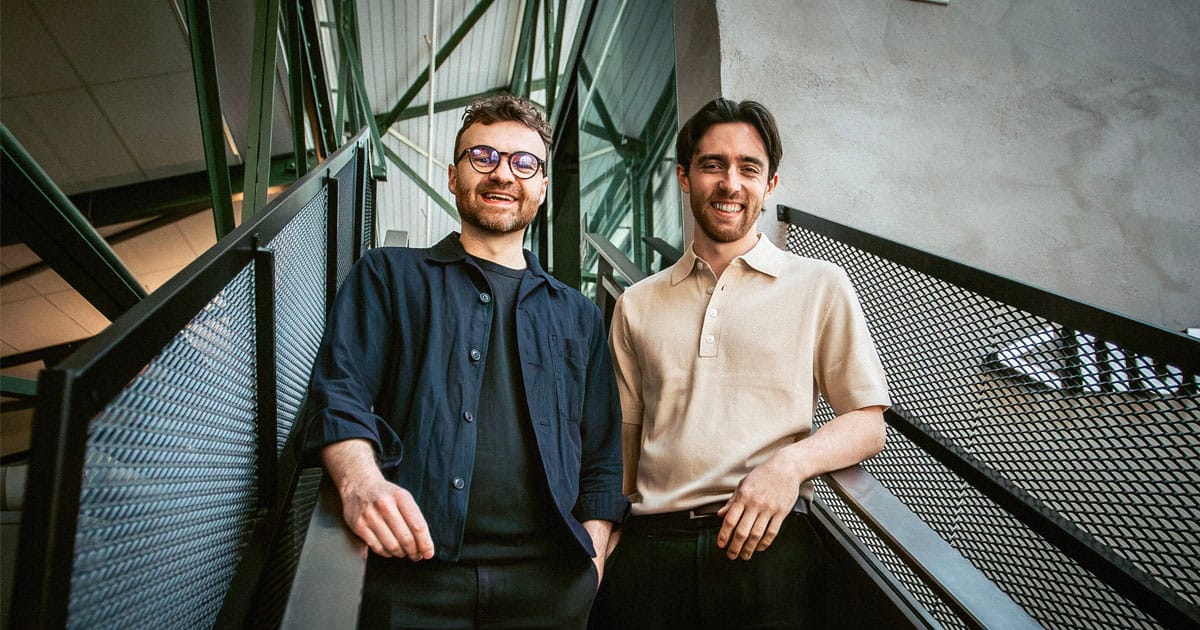
Tolemy Bio co-founders Alex Ward and Caelan Anderson
Premium subscribers get the full version of this article, plus a TLDR summary right here, and access to our Startup Tracker for updates about what this startup does next.
Over the years at PreSeed Now, we’ve covered a range of startups working with living cells. Experimental work with cell biology is a thriving market, and with thriving markets come businesses looking to better support activity in the space.
Enter Tolemy Bio, a startup building what it describes as an “AI-native virtual cell platform” for the biopharma market.
“One of the big problems when you grow a cell outside of its natural environment, outside of tissue or a body, is it's really hard to understand what that cell needs to ‘eat’, and what kind of environment cells should exist in to get the most out of those cell cultures,” explains co-founder Alex Ward.
“What we do is try to understand what cells need to survive and thrive in an area outside of the body, in a bioreactor or in a cell culture dish, whatever it might be. Whatever the process being used by the therapeutics company, we try to understand those needs and direct those needs.”
In practice, this is done through Orbit, Tolemy Bio’s product, currently in beta.
“The customer interacts with and uses it much as they would other data analysis tools, except we have what we call ‘virtual cell models’ that power the insights. It's really advanced AI put into the hands of scientists who are not necessarily data scientists by training,” Ward says.
“We're giving them the keys and the tools to be able to understand their data better, understand their cells better, and direct those functions of cells through software.”
In practice, this could be recommending levels of glucose or amino acids that would support the cells in question, for example.
The story so far
Ward has a PhD from the University of Bristol, which involved understanding how specific cells in the heart work.
Not keen on a career working in laboratories, and seeing the software-augmented direction his field was moving in, he entered the world of computational biology in Australia before working at a cultivated meat startup there, called Vow.
The company was growing cells from unusual species like crocodiles and buffalo. They even made a woolly mammoth meatball.
It was while designing cell culture environments in which to allow such unusual delicacies to be developed that he met software engineer Caelan Anderson, who worked on the same team.
After they both left Vow, the pair realised they had the complementary skills necessary to launch their own startup. They identified cell therapy as a prime market after talking to people in the space who were looking for something like the Orbit product. And thus Tolemy Bio was born.
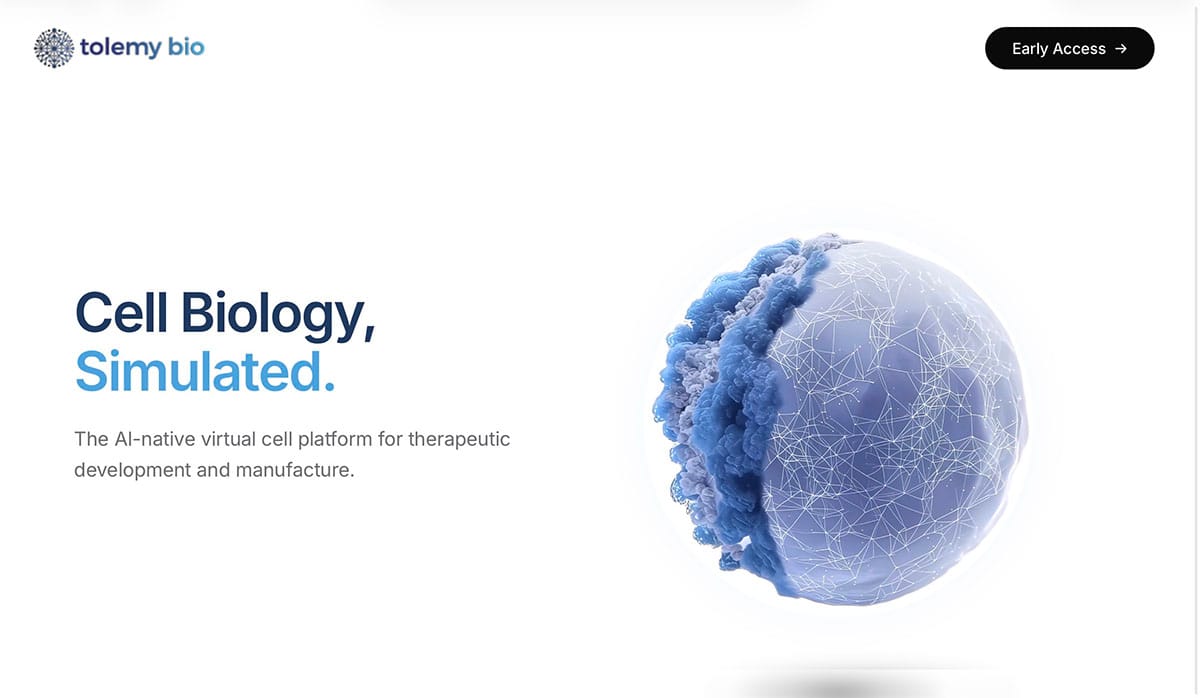
Tolemy Bio’s current website homepage
While registered as a company in the UK, the bulk of the startup’s activity happens in Barcelona, where Ward and Anderson are now based.
“Barcelona really has a unique landscape for cell therapy. It's a fantastic hub, in European terms, for advanced therapeutics. Barcelona has more oncology clinical trials in this area of cell therapy than the whole of the Netherlands. So it's really an exceptional place for talent, for academic skills, and just to build this type of company and target the types of customers that we're targeting,” Ward explains.
Labs at MIT, UCL, and the University of Cambridge, along with stem cell charity Anthony Nolan and bioreactor company MFX, are all signed up to test Orbit in beta.
Ward says the plan is scale up to as many as 50 customers in the coming months, with a goal to serve hundreds of labs within two years.
“We're targeted and tailored around the cell therapy industry to begin with, but the goal is to make this a generalisable platform that can be used across cell biology. If you think about novel biologics, or potentially even novel foods in the future, the application of this platform is so vast,” he says.
Funding:
Tolemy Bio has today announced it has raised a €1.4 million (around £1.2 million) pre-seed round.
The round was led by Norrsken Evolve with participation from Big Sur Ventures, JME Ventures, Masia, and (mysteriously!) a new UK stealth fund.
Upgrade your subscription now to learn about:
The co-founders’ vision for the future of the company
How Tolemy Bio squares up to the competition
What challenges the startup faces as it grows
…and you’ll be supporting PreSeed Now to bring you more profiles like this

Subscribe to Premium to read the rest.
Become a paying subscriber of Premium to get access to this post and other subscriber-only content.
Already a paying subscriber? Sign In.
A subscription gets you:
- • Full profiles of early-stage startups every Tuesday & Thursday: go deeper on each startup
- • Access to our acclaimed Startup Tracker database of early-stage UK startups