- PreSeed Now
- Posts
- 10 startups getting you excited over the past 12 months
10 startups getting you excited over the past 12 months
Who's made the cut this time...?

Martin SFP Bryant
January 20, 2026

In partnership with


It’s that time every quarter when we open up our spreadsheet and figure out which of the startups we’ve featured have been resonating most with you over the past 12 months.
As ever, this list is calculated via a combination of views and shares.
Who made the list? Read on and find out….
– Martin
Hiring in 8 countries shouldn't require 8 different processes

This guide from Deel breaks down how to build one global hiring system. You’ll learn about assessment frameworks that scale, how to do headcount planning across regions, and even intake processes that work everywhere. As HR pros know, hiring in one country is hard enough. So let this free global hiring guide give you the tools you need to avoid global hiring headaches.
The 10 startups getting you most excited over the past 12 months
…based on reads and shares on PreSeed Now:
Veraty

Ask Silver co-founders Alex Somervell and Jonny Pryn
“Two of the biggest blockers to startup and scale-up growth that we found is often the law; legal regulation, but also customer legals, legal teams and requirements, and then also data protection or cyber security,” says Veraty co-founder Jeremy Chan.
“So what we’ve tried to do is build in one platform, a legal AI that can handle all of those queries that startups and scale-ups might face, and unblock teams to help them grow quickly.”
In practice, this means a single AI interface to handle all the legal hurdles a startup might face. This includes everything from basic legal documents, to regulatory challenges, customer complaints, and closing B2B deals.
Eventually, the Veraty team wants to replace lawyers entirely for these tasks, but they’re being careful about how they build the product and even provide customers access to human lawyers where needed.
Location: London
PeriPear
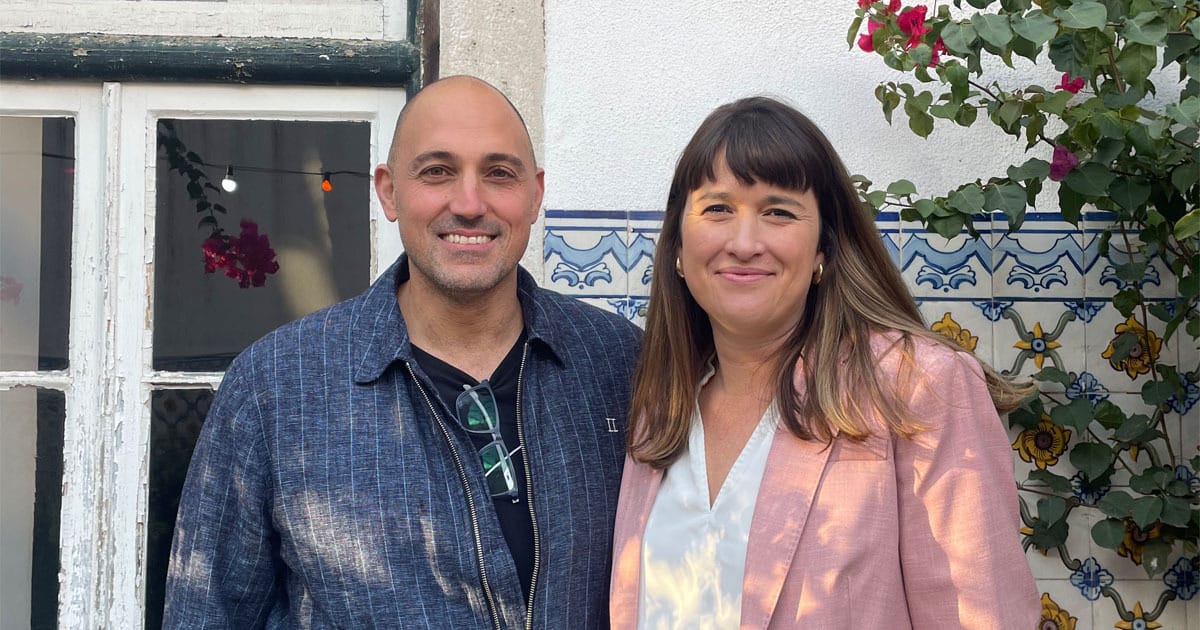
PeriPear cofounders Eviatar Natan and Nina van Schaick
This startup is solving a serious problem very much deserving of attention, in the field of women’s health - a notoriously under-funded area. So, it was good to see PeriPear get such a good response from PreSeed Now readers.
Perineal tear injuries occur in as many as 90% of vaginal births, and nearly half of these injuries will require surgical repair.
Midwife Nina van Schaick was frustrated with the lack of innovation in reducing these problems, which can result in expensive surgery and longer hospital stays for new parents, and complicate what should be a happy occasion.
Currently, a warm compress is best practice for reducing risk of tears, but van Schaick says that in many cases, even that doesn’t happen. So PeriPear is developing a device designed to be used during childbirth that could significantly reduce the problem of perineal tear injuries.
Location: Oxford
PreSeed Now profiles super-early-stage B2B and deep tech startups you need to know about every Tuesday and Thursday.
Get it in your inbox for free:
Nafura
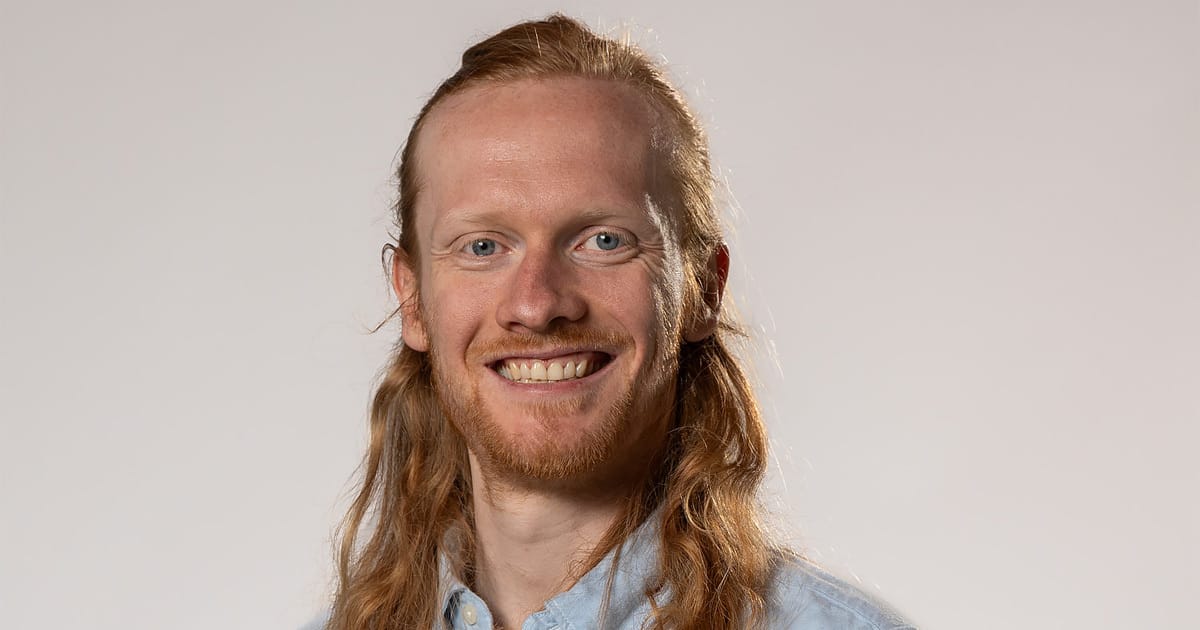
Nafura co-founder Harry Brooksbank
“We're living in 2025 and we've got advanced quantum computing and we can land a rocket on a floating barge, but when you look at what we're doing in terms of wastewater, it’s so archaic,” argues Harry Brooksbank, co-founder of Nafura, a brand new startup taking a fresh approach to dirty water.
Nafura’s approach harnesses a process called plasma gasification, which is already used to treat other forms of waste.
The idea is that wastewater is pumped through Nafura’s device, where it is blasted by a plasma torch in a thermal plasma gasification process.
“We can destroy any contaminant. It doesn't matter if it's biological, chemical, or even physical microbes - solvents, nasty pesticides, or even microplastics. We can destroy them all in situ,” Brooksbank explains.
Location: Derby
Myoform

Myoform co-founders Sacha Attiach and Theo Wiley
The precision nutrition market in North America alone has been pegged at around $6 billion, with a prediction that it could reach $12.89 billion by 2029.
Myoform is a new startup entering this space with a focus personalised supplements for athletes of both the professional and serious non-pro kind.
As co-founder and CEO Theo Wiley puts it, Myoform wants to take the principles of precision medicine and apply them to consumable health products.
A Myoform customer begins with a genetic test. They spit in a tube and send it back to the startup, which orders a whole-genome sequencing from the sample. The customer also fills in a questionnaire about their personal details and objectives.
Once the sequencing is done, an algorithm Myoform has developed figures out what specific nutritional support the customer might need, based on their genetic profile and their questionnaire responses.
Just yesterday, Myoform exited private beta with a public launch.
Location: London
Rightbrain

Rightbrain’s Peter Cheyne and Matt Wells
Rightbrain has adjusted its positioning since we covered it in 2025. It’s now designed to help teams deploy AI agents and tooling directly into the platforms they already use.
Co-founder Peter Cheyne explains: "We allow teams to build custom AI capabilities for their specific use cases and integrate them into their workflows.
"The real challenge isn't building an AI prototype. The hard part is getting AI to perform consistently, integrating it into existing systems, and doing all of that in a way that doesn't require a dedicated AI team. Most businesses don't have that, and they shouldn't need one.
"What we see repeatedly is a disconnect between the people who understand the business problem and the people who can technically deliver AI solutions. Operational leaders know exactly where AI could help, but they're stuck waiting on engineering resources or buying off-the-shelf tools that don't fit their specific needs.
"That's where we come in. We collapse the gap between understanding a problem and having a working AI solution. Not a demo or proof of concept. Actual AI capabilities running inside the platforms teams already work in, configured for their terminology, their business rules, their edge cases.”
Rightbrain says it is being used by go-to-market teams to automate CRM research, legal teams to streamline vendor reviews, and operations teams to speed up candidate onboarding.
Location: Newcastle-upon-Tyne
Enjoying PreSeed Now?
Get more from us and support us to keep bringing you startups and viewpoints from the early-stage startup world.
Upgrade to Premium with a 50% discount in January 2026 (and the discount lasts for a whole year!)
Astut
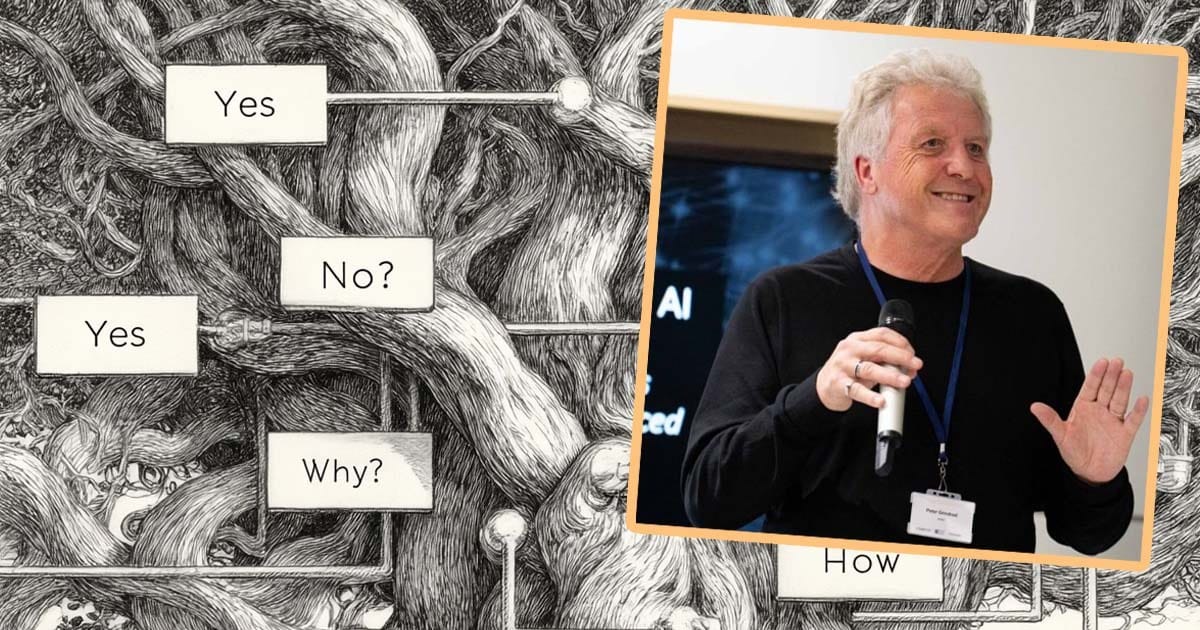
Astut founder Peter Grindrod [image: PreSeed Now]
AI can be great for using data about the past to guide similar decisions in the future. Want to predict the best delivery routes for a logistics business? Want to figure out the best target audience for your new ad? Enough data and the right software, and you’re sorted.
But what about important, strategic decisions you’ve never made before, where there isn’t any data? AI will typically struggle to give you much in the way of useful guidance.
That’s where Astut, a new Oxford University spin-out, wants to step in by assisting with what it calls ‘High Stakes Unseen Decisions’.
As an example of how Astut will work, imagine a retailer considering a significant business pivot into a new vertical. As they decide whether or not to make this significant move, they use Astut’s technology.
The product uses natural language inputs, allowing the user to explain what they’re planning to do, and the constraints they have. For example, they might include that the solution has to be legal, sufficiently profitable, aligned with the company’s brand values, and feasible with the available technology stack.
Inputs can include hundreds or thousands of constraints, and there is support for industry-specific terminology.
Outputs might advise users on what to do, accompanied with a list of reasons why. Conversely, it might provide a list of reasons why the user’s proposed action is a bad idea. It’s about providing insightful, reasoned options.
Location: Oxford
Voxelo

Voxelo co-founders Ben McKay and Vladimir Mulhem
Gaussian splatting is a technology that enables a new way of creating 3D graphic objects from real-life physical objects with far greater accuracy than previous efforts.
Voxelo has a tightly focused, practical, commercial use case for the technology: better, easier-to-produce, 3D models of products for ecommerce.
Simply shoot a video of an object, and Voxelo’s software will create a high-quality 3D graphic of it that can be easily integrated into ecommerce websites.
Voxelo’s software is designed to replace the need for expensive professional studio equipment or less effective tech such as the photogrammetry-based 3D mapping built into iPhones.
Location: Manchester
Circkit

Part of the CircKit team (L-R): Annabel Lindsay, Joe Darwen, Lydia Oyeniran
‘Circular fashion’ is easily thought of as a buzz-phrase used by people who want to market their clothing brands as having green credentials. But thanks to recent and emerging legislation in the EU, UK, and beyond, sustainability is a serious business concern for many brands these days.
CircKit thinks it has the answer to the admin and process headaches this creates. It’s designed for use by brands, integrating with their existing processes.
The software can slot in at the start of the development journey for new products, or can ingest historical data from collections and ranges. This can be structured or unstructured data (“even the biggest brands are still on spreadsheets”), and a range of software systems.
The data is then processed with machine learning to figure out relevant factors such as the locations of suppliers, the processes they use, the bill of materials, and much more.
Location: Manchester
Enginuity

Enginuity founder Richard Heggie
A stat commonly thrown around says that up to 95% of filed patents are never put to any use.
Enginuity wants to do something about that with its mission to “make the world’s IP searchable and actionable for innovators”.
You could just go to Google Patents to search up all of the patents featuring certain keywords you’re interested in, but the results are rudimentary and better suited to finding a patent you already know about than exploring innovations.
What Enginuity wants to do is help R&D departments, entrepreneurs, universities, and investors better understand what already exists in fields they work within, and help them build upon it.
Location: Distributed (founder based near Southampton)
Qlarifi

Qlarifi co-founders Loïc Berthou and Alex Naughton
Traditional credit bureaus aren’t well equipped to keep track of fast-paced, small-value loans in the buy-now-pay-later (BNPL) space. This can be a problem to lenders and borrowers alike.
Enter Qlarifi, which describes itself as “the world's first buy-now-pay-later specific credit bureau.”
Qlarifi takes data from BNPL loan providers, with the aim of helping lenders of all kinds make more informed underwriting decisions. Meanwhile, regulators and the BNPL industry can get a more detailed understanding of what kinds of additional consumer protections they might need to put in place.
Qlarifi ended 2025 by being acquired by Socure.
Location: London