- PreSeed Now
- Posts
- AI to handle a boring, but critical, part of building successful video games
AI to handle a boring, but critical, part of building successful video games
ManaMind helps make sure games don’t ship packed with bugs

Martin SFP Bryant
May 19, 2026
In partnership with


I love video games, and the ones I love most are the ones that don’t ship packed with bugs. As games get bigger, that’s an increasingly common problem.
ManaMind has developed its own large multimodal AI model to automate the expensive, painstaking, boring process of video game quality assurance.
Read on to find out more…
– Martin
Attio is the AI CRM for high-growth teams.
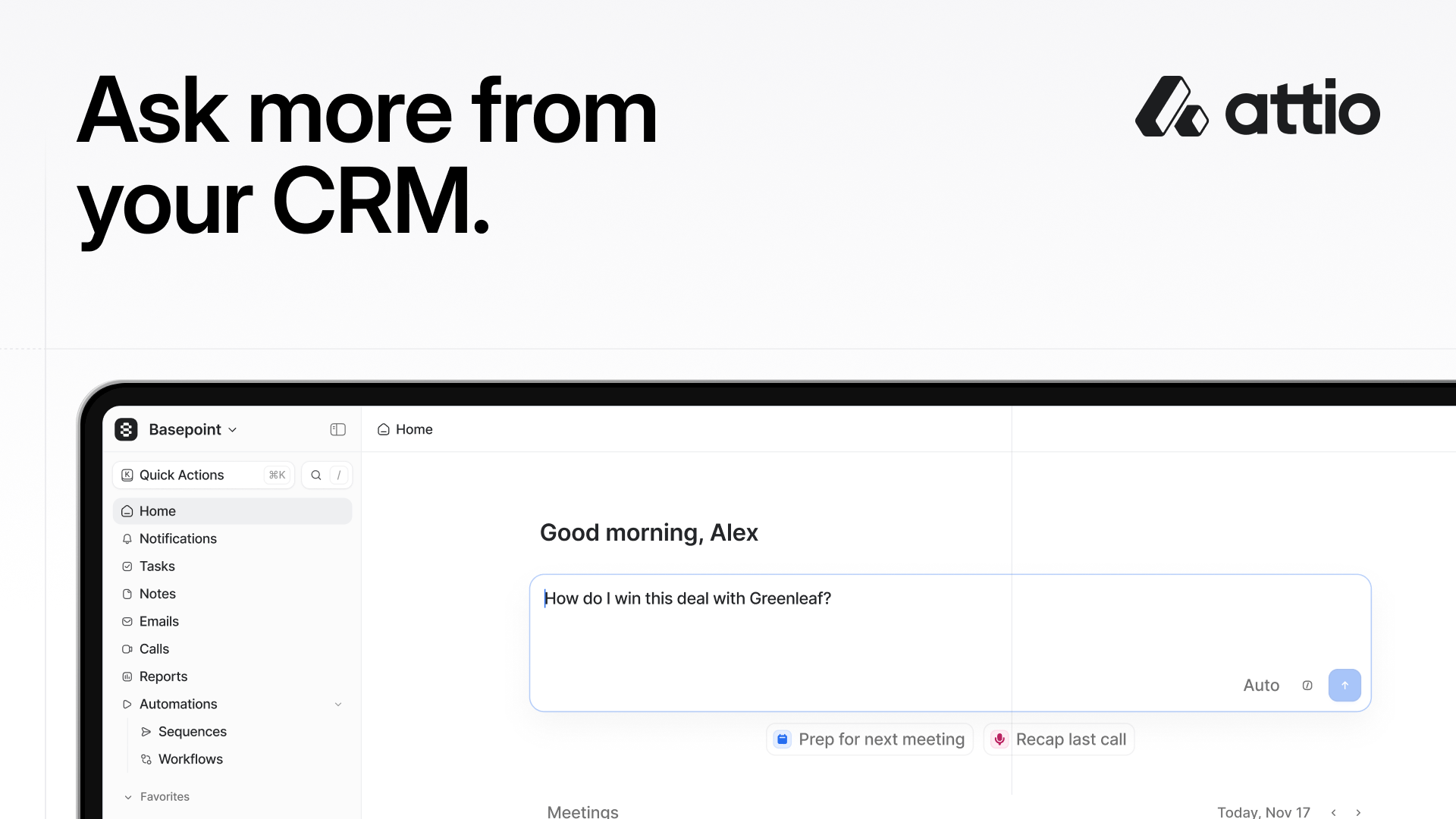
Connect your email, calls, product data and more, and Attio instantly builds your CRM with enriched data and complete context. Whether you’re running product-led growth or enterprise sales, Attio adapts to your unique GTM motion.
Then Ask Attio to plan your next move.
Run deep web research on prospects. Update your pipeline as you work. Find customers and draft outreach emails. Powered by Universal Context, Attio's intelligence layer, Attio searches, updates, and creates across your data to accelerate your workflow.
Ask more from your CRM.
ManaMind has built AI to handle a dull and expensive, but critical, part of game development

ManaMind co-founders Emil Kostadinov and Sabtain Ahmad
Premium subscribers get the full version of this article, plus a TLDR summary right here, and access to our Startup Tracker for updates about what this startup does next.
Video games are complex beasts that require rigorous testing to ensure they don’t go to market packed with show-stopping bugs.
The sheer size of some of triple-A titles makes testing laborious and expensive. Testers need to check that everything in enormous open-world games works as expected, no matter how players approach the tasks at hand.
At the other end of the market, small independent developers have limited resources but must still conduct rigorous quality assurance, as a buggy launch could turn a potential hit into a business-ending flop.
While some playtesting can now be automated, much of it usually relies on outsourced teams of humans working through huge, boring lists of tasks. It’s expensive and inefficient.
ManaMind has developed a solution to the problem: AI that autonomously plays games, discovers bugs and generates bug reports. The London-based startup has developed its own proprietary LMM (large multimodal model) that can approach a video game like a human does, taking video, audio, and language inputs and interacting using actions like button presses and screen taps.
The real value here is in handling the really mundane parts of testing, CEO and co-founder Emil Kostadinov says. AI doesn’t get bored navigating menus for hours to check they don’t break, for example, and it can run 24 hours a day without rest.
Unlike SDK-based playtesting tools, ManaMind doesn’t need to be hooked into a game development environment. It can simply be prompted to test specific elements of a test build of the software.
“You can say, ‘Hey, can you please test the fourth level in my game?’. Our AI would then work out that to do this it would probably need the bot that can navigate menus to get to the gameplay, and it probably needs the bot that can do the progression testing to see if I can really go from the start of the level to the end of the level,” Kostadinov says.
“There could be a couple more, depending on the type of game. If there's a lot of fighting, for example, you may need the fighting bot and so on. And then because the game is being deployed in multiple devices, it may need the replicator bot to record the first test session and then replicate it on bunch of other hardware configurations.”
The AI then generates any necessary bug reports so developers know what to fix. The reports includes ratings for severity and reproducibility, to help prioritise work. In the future, this will integrate with existing ticketing systems that developers use.
The approach of letting AI simply play the game rather than integrate with development environments initially proved surprising to some developers, Kostadinov says:
“The beauty of it is that we never give it access to the game code, game engine, or to the platform. It's completely agnostic. People called us crazy when we did it, but we're really happy with it, because that is what gives us true scalability. We don't want to start doing custom integrations on a per-game basis, because that would then drive costs. And people are already trying to keep their costs low on QA.”

ManaMind’s website
The story so far
Kostadinov grew up with a passion for video games, which led him to doing some QA work on a game. He quickly learned that it’s not as fun as it sounds.
As we speak, he has a deluxe launch edition of the space exploration game No Man’s Sky on his desk. He explains how he was incredibly excited about the game before it was released, but it was so buggy on day one that he says he has only ever played it for five minutes.
The developers famously turned the game around into a classic over time, but by that point they had lost people like Kostadinov. He uses this as a cautionary tale for why ManaMind matters.
Kostadinov co-founded the startup with CTO Sabtain Ahmad, who he met after a months-long search for the right person to start the business with.
The startup has now proved its tech works, trumpeting “full regression cycles completed in six hours rather than days, with 86% of critical bugs caught before shipping” in early deployments.
“It's been pretty cool. We've seen customers running unending QA, for like a week straight, never stopping. And we've seen the benefit of just how much the quality of the game is able to improve in such a short period of time,” Kostadinov says.
The team’s goal for the rest of the year is to expand and refine the product in response to user feedback.
Funding:
ManaMind recently announced that it had raised a $1.5 million pre-seed round led by SVV, with participation from EWOR, Ascension, Syndicate Room, and Heartfelt.
Upgrade your subscription now to learn about:
The co-founders’ vision for the future of the company
How ManaMind squares up to the competition
What challenges the startup faces as it grows
…and you’ll be supporting PreSeed Now to bring you more profiles like this

Subscribe to Premium to read the rest.
Become a paying subscriber of Premium to get access to this post and other subscriber-only content.
Already a paying subscriber? Sign In.
A subscription gets you:
- • Full profiles of early-stage startups every Tuesday & Thursday: go deeper on each startup
- • Access to our acclaimed Startup Tracker database of early-stage UK startups