- PreSeed Now
- Posts
- A promising solution to a critical problem with clinical trials
A promising solution to a critical problem with clinical trials
FairMD wants faster, more effective testing of drugs and medical devices

Martin SFP Bryant
March 26, 2026

We’re in the world of healthcare today, with a startup that wants to help clinical trials operate faster and more effectively.
Read on to discover FairMD.
Know a startup that should be featured in PreSeed Now? We’re looking for startups:
Anywhere from inception to raising seed
In deep tech or B2B
Based in the UK
Doing something interesting!
Drop me a line and tell me who you think we should be talking to.
– Martin
Clinical trials have a recruitment problem. FairMD has a promising solution…
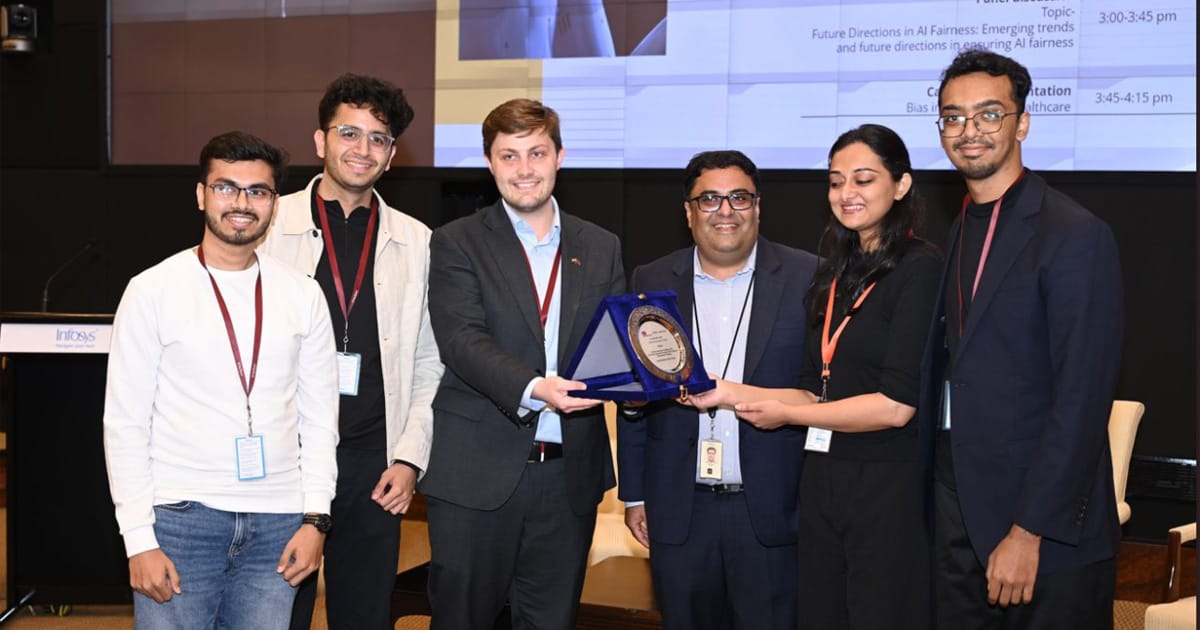
The FairMD team
Premium subscribers get the full version of this article, plus a TLDR summary right here, and access to our Startup Tracker for updates about what this startup does next.
Clinical trials are an essential part of improving healthcare, and yet the vast majority of trials are delayed due to challenges with recruiting the right people to take part.
Even if they go ahead, they can end up including fewer participants than planned.
FairMD is a startup that wants to help the pharma and healthcare sectors perform better clinical trials and fix what co-founder Rounak Verma calls “the biggest operational bottleneck in clinical trials, which is slow and biased patient recruitment.”
The technology the team is developing is designed to integrate into existing hospital software systems. Verma explains that it can read real-time patient records at the point of care, and then uses this data to identify eligible patients based on what the clinical trials are currently recruiting for.
Details of these patients are then sent to research nurses, who work on clinical trial recruitment and screening. They can then reach out to these patients to potentially take part in a relevant trial.
Importantly, the tech uses AI to make sense of the details of each clinical trial, which can vary a lot in the way they’re presented, Verma says:
“It can read complex clinical trial protocols, which includes their inclusion and exclusion criteria and what are they looking for in a patient. This is important because trial protocols don’t have a standard for how they’re written. It depends on who is writing it, and what therapeutic area the disease is in.
“We have a proprietary bias detection engine, which would be used to make sure that there is no bias in the AI model that we're using, and also there’s diversity and inclusion in the reports and in the results that we give out.”
Verma says pilots with the software so far have demonstrated a 3x increase in the number of patients identified compared to other tools that are currently being used. And it also provides a 45% reduction in screening time. This can be a big money-saver, Verma says:
“Screening time is when the patient has been identified and they consent to participate in the clinical trial, then they need to be screened. What happens a lot of times at the moment is that a wrong patient is identified and they fail the screening test. So there’s a lot of money wasted in that process.”
FairMD also claims a 25% increase in the inclusion of underrepresented cohorts through use of its software. This is important to make sure treatments’ effects on different types of people are understood.
The story so far
Trained as a doctor in India, Verma worked as a frontline healthcare worker there during the height of the Covid pandemic.
“We had to use a pulse oximeter to determine who needed oxygen, but that device under-read on certain populations. That’s when I realised that the system needs to change for medical devices and drugs to work on everybody,” she says.
Verma has previously worked with UNESCO, studied at the London School of Economics, and explored bias in AI models for medical journal The Lancet. She says her backgrounds in policy, innovation, and healthcare have converged in the founding of FairMD.
“I’ve studied health policy and I’ve worked in AI ethics for a very long time. So it’s like connecting the dots. Entrepreneurship is what provides you the vehicle to be able to collaborate with different people in different disciplines and then truly drive change.”
Verma co-founded FairMD with close family member Arnav Shrivastava, who is a computer scientist and entrepreneur. They began the company in late 2024 and have moved pretty fast, it has to be said. They have already taken part in the Future Worlds accelerator at the University of Southampton and completed pilot studies of their product.
“We have our pilot results, and we have 51 hospital centres in the pipeline that we now want to scale our deployment to. So we will be defining our product and then deploying these across these hospital centres. These are spread across the US, the UK, India and Singapore, so across four countries.
“We want to deploy them, look at the solutions, publish them, generate a positive feedback loop, and then just get on a rocket ship from there.”
Upgrade your subscription now to learn about:
FairMD’s funding and investment plans
Co-founder Rounak Verma’s vision for the future of the company
How FairMD squares up to the competition
What challenges the startup faces as it grows
…and you’ll be supporting PreSeed Now to bring you more profiles like this

Subscribe to Premium to read the rest.
Become a paying subscriber of Premium to get access to this post and other subscriber-only content.
Already a paying subscriber? Sign In.
A subscription gets you:
- • Full profiles of early-stage startups every Tuesday & Thursday: go deeper on each startup
- • Access to our acclaimed Startup Tracker database of early-stage UK startups