- PreSeed Now
- Posts
- Could this startup save the chip fab sector billions?
Could this startup save the chip fab sector billions?
Deep Fabrication wants to boost yields with deep learning models

Martin SFP Bryant
March 19, 2026
In partnership with


Today let’s head to Southampton, where a new university spinout is gearing up to boost the yields of the semiconductor industry with an approach based on deep learning techniques.
Read on to discover Deep Fabrication.
– Martin
Attio is the AI CRM for modern teams.

Connect your email and calendar, and Attio instantly builds your CRM. Every contact, every company, every conversation, all organized in one place.
Then Ask Attio anything:
Prep for meetings in seconds with full context from across your business
Know what’s happening across your entire pipeline instantly
Spot deals going sideways before they do
No more digging and no more data entry. Just answers.
Deep Fabrication has a smart way of reducing production errors in chip fab plants
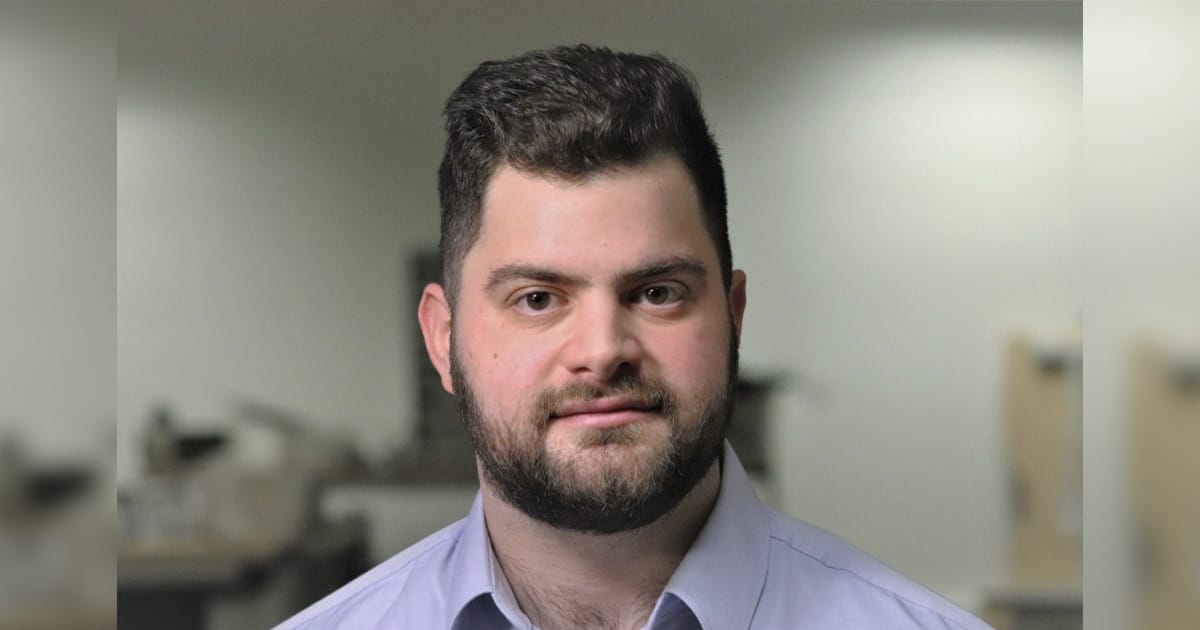
Deep Fabrication founder Yasir Noori
Premium subscribers get the full version of this article, plus a TLDR summary right here, and access to our Startup Tracker for updates about what this startup does next.
Chip fabrication is an enormous industry, but it can suffer from low yields. This is due to defects in manufacturing processes that can be difficult to iron out.
Many chips can come off the production line defective, driving up manufacturing times and increasing costs.
Deep Fabrication is a startup that says it has a solution to help the semiconductor industry improve yields.
“What we're doing with our tools is we allow fabrication engineers to model steps within the fabrication process to allow them to anticipate or predict where or how defects will appear, and the scale of these defects, before they go and actually manufacture,” says founder Yasir Noori.
“It's a way of predicting and minimising the impact of defects in the manufacturing process. That allows them to save a significant amount of money by increasing the yield, and better utilise cleanroom or fabrication resources, better utilise materials that are used in the fabrication process, and better utilise labour costs as well.”
Deep Fabrication’s software will step in at the point after a chip has been designed but before it has been taken to lithography machines to be printed.
“There could be 50 billion transistors in a chip design. Normally, after printing, you might end up with a fabrication outcome that will have defects or issues, or some of these transistors will have different shapes from what you designed them to be. The geometries of these transistors determine how well these transistors will perform,” Noori explains.
The tech that Noori and his collaborators at the University of Southampton have developed analyses chip designs and the accompanying instructions for the lithography machine to model the likely outcome.
If the yield is likely to be too low, they can keep tweaking their plans until Deep Fabrication gives them a prediction they’re happy with.
“If they didn't have our tools, they would have to try the recipe multiple times, with many trials and errors until they might master the recipe. But that's a very costly process, and that's what we're trying to reduce in terms of the cost for manufacturing,” Noori says.
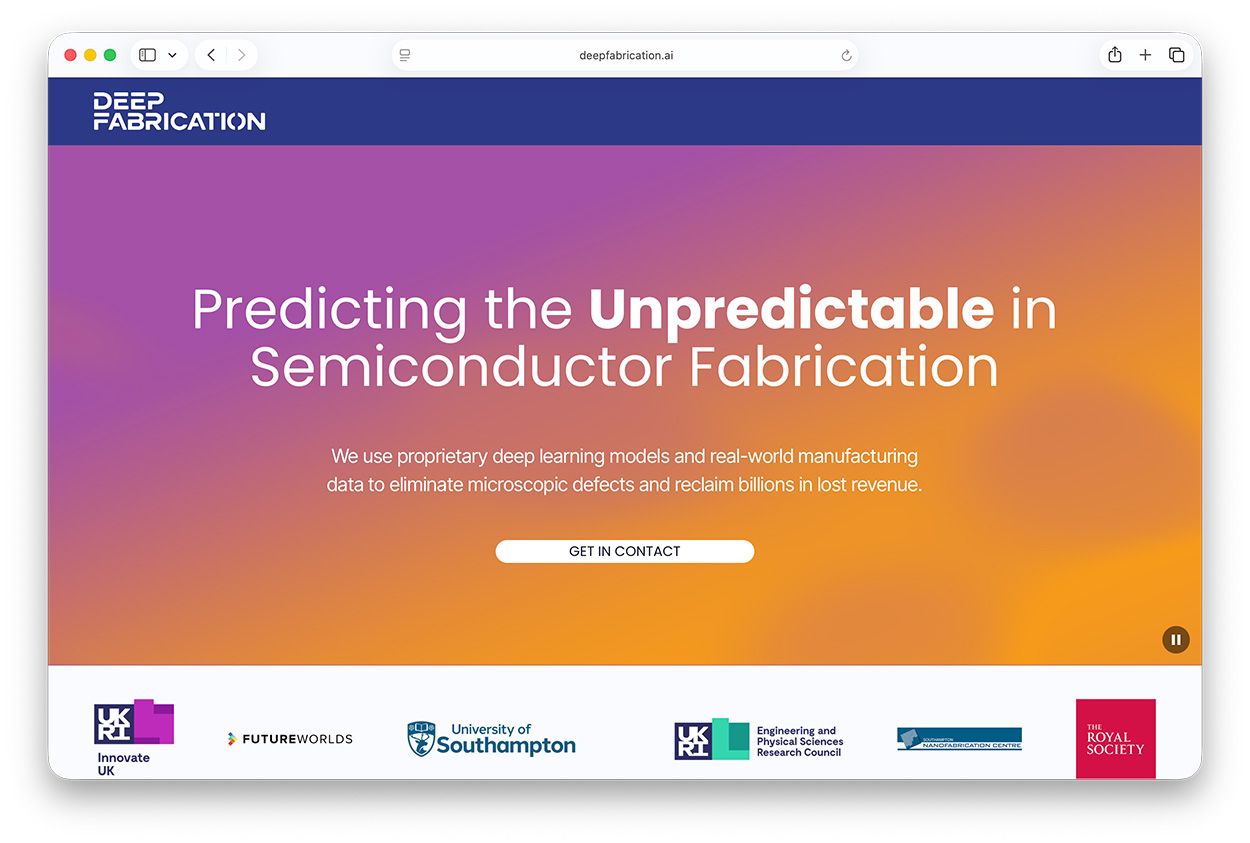
Deep Fabrication’s current website
The story so far
Noori has a background in electronic engineering and semiconductor fabrication. While he has a PhD in quantum communications, he has a real passion for “making things at nanometre scale,” and it is this that drew him to found Deep Fabrication.
The story began at a ‘speed dating’ event at the University of Southampton, bringing together academics working in AI with those who weren’t. There he met a colleague and teamed up to work on AI for nano-fabrication. The work, conducted with a PhD student they are supervising, has culminated in Deep Fabrication, which is currently spinning out from the university.
The startup has just completed the Future Worlds accelerator programme, which is based at the university.
While the startup is beginning with the lithography process, its eventual aim is to develop models to help with all stages of the chip fabrication process.
Noori says the technology has been tested at the university, and they’re now looking for industrial partners to begin to test it with real production processes.
Upgrade your subscription now to learn about:
Deep Fabrication’s funding and investment plans
Founder Yasir Noori’s vision for the future of the company
How Deep Fabrication squares up to the competition
What challenges the startup faces as it grows
…and you’ll be supporting PreSeed Now to bring you more profiles like this

Subscribe to Premium to read the rest.
Become a paying subscriber of Premium to get access to this post and other subscriber-only content.
Already a paying subscriber? Sign In.
A subscription gets you:
- • Full profiles of early-stage startups every Tuesday & Thursday: go deeper on each startup
- • Access to our acclaimed Startup Tracker database of early-stage UK startups